

Consumer Electronics

Automotive

Smart Home

Healthcare

Industrial Production

BR

EDR

LE

CS

HDT
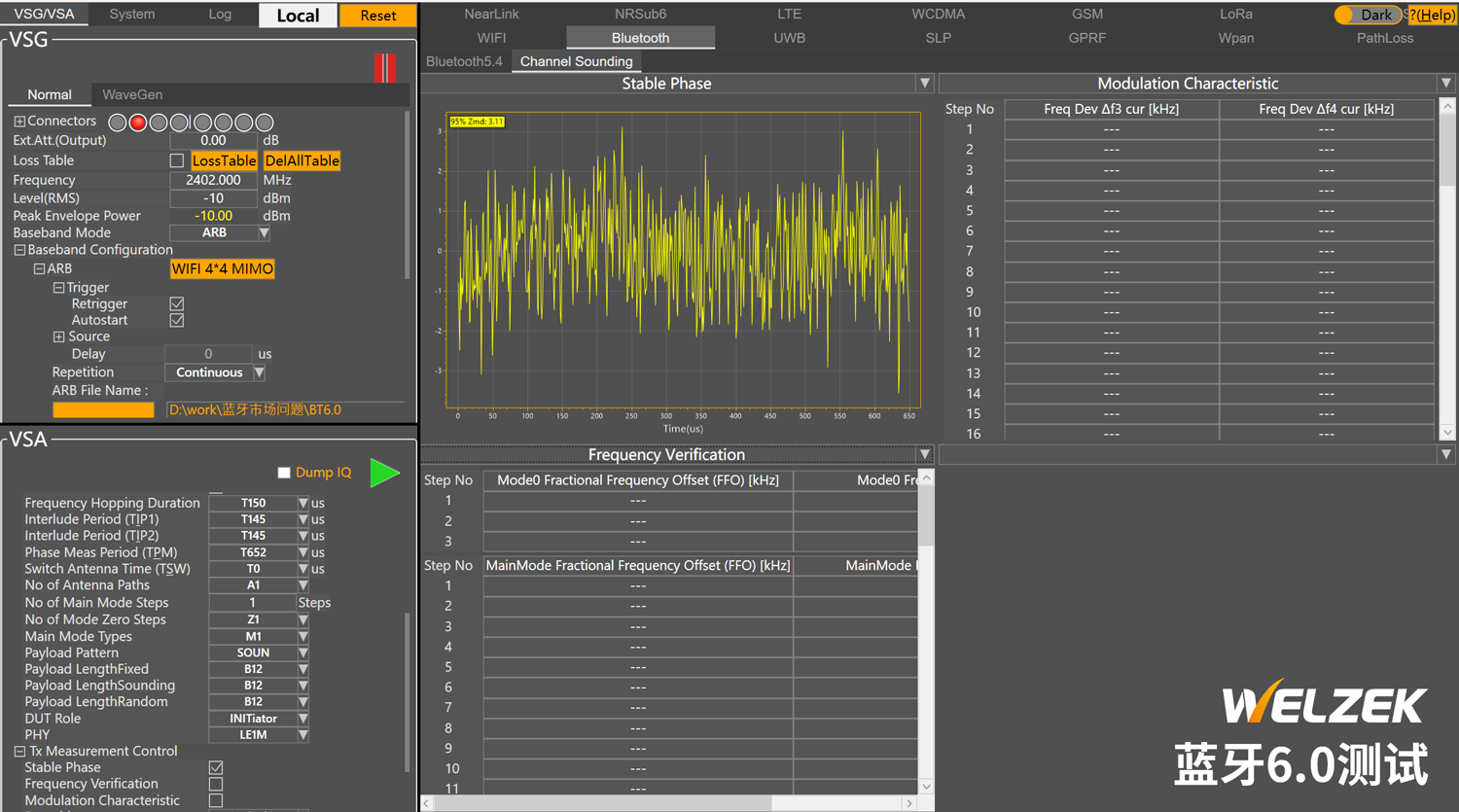
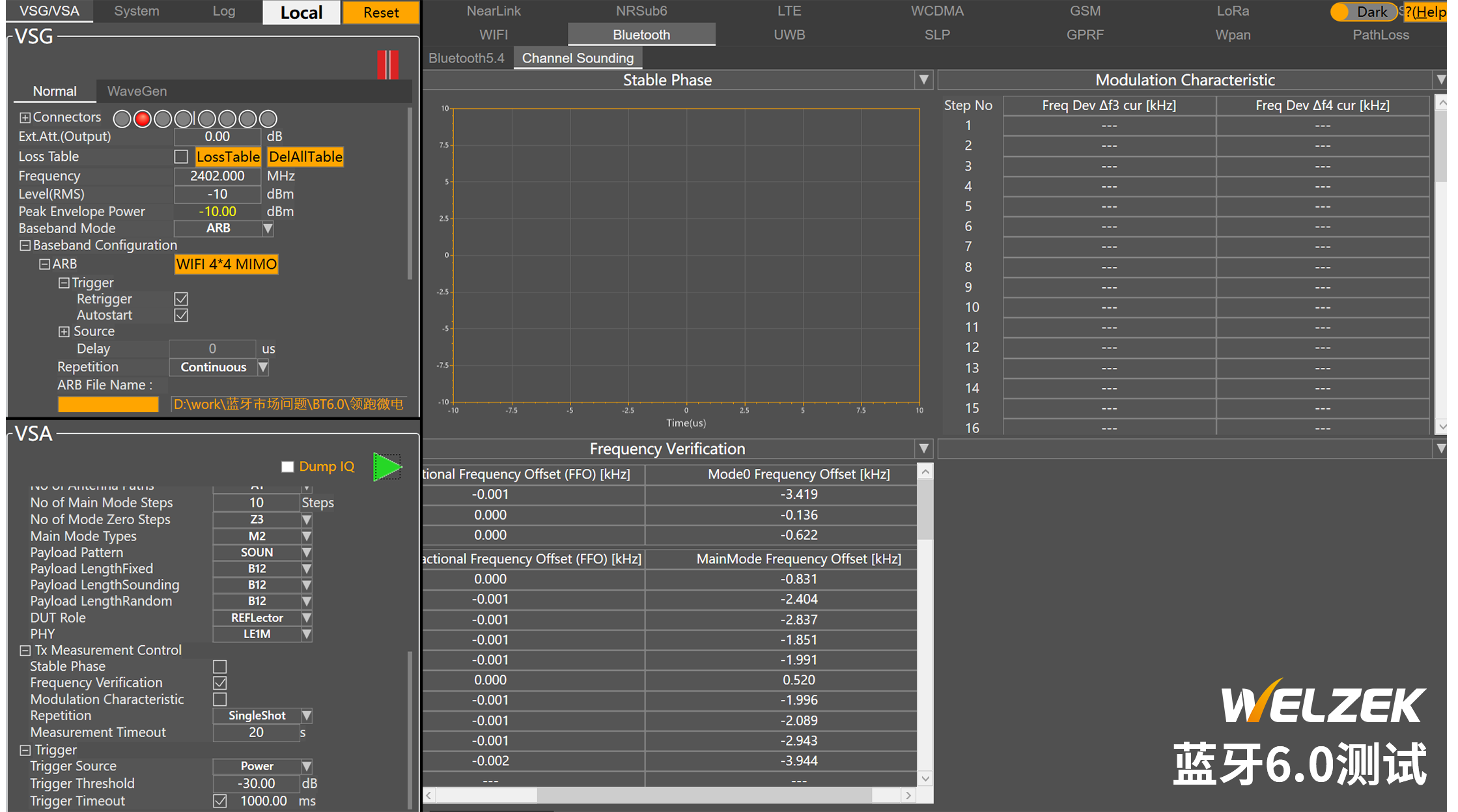
Bluetooth 6.0 Channel Sounding (CS) Test
Bluetooth Channel Sounding, the most significant update in Bluetooth 6.0, enables two LE devices to estimate distance through a dedicated procedure, achieving precise ranging and positioning. It supports two main ranging modes: Round‑Trip Time (RTT) and Phase‑Based Ranging (PBR).
1.RTT Mode
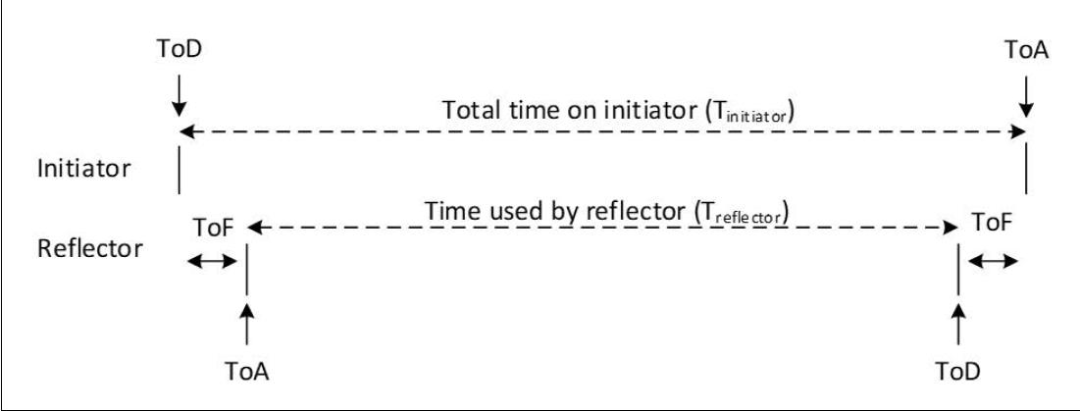
Two Bluetooth LE devices exchange CS_SYNC packets to estimate Time of Flight (ToF), thereby calculating the distance between them, as shown below:
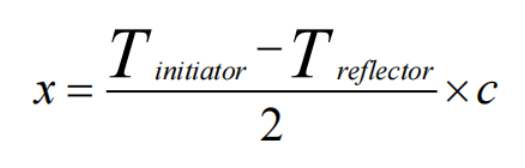
In estimating ToF, Time of Departure (ToD) and Time of Arrival (ToA) are used. The relationship among the three is shown in the figure below:
2.PBR Ranging Mode
In PBR mode, the relationship between phase difference and frequency is used to estimate the integer multiple of wavelengths between two Bluetooth LE devices, thereby calculating the distance between them, as shown in the following formula:
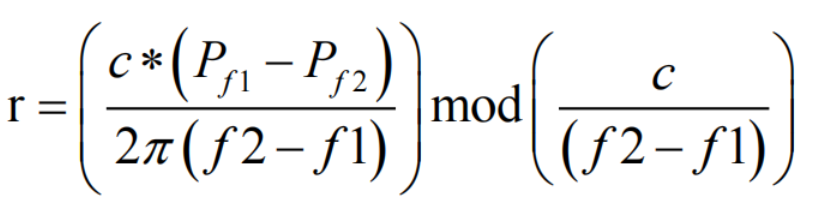
r represents the two-way ranging distance between two Bluetooth LE devices. A schematic diagram of two-way ranging is shown below:

Device A transmits signals at frequencies f1 and f2 to Device B. Device B receives the signals and uses the phase of the incoming signals as a reference to respond on the same frequencies. Device A then records the received phases, denoted as Pf1 and Pf2, and calculates the distance between the two devices using these parameters.
RF measurements for Bluetooth Channel Sounding are mainly divided into TRM (Transmitter tests) and TRM-RCV (Transmitter/Receiver tests). The specific test items are as follows:
Transmitter tests(TRM)
◇ CS Stable Phase
◇ CS Modulation Characteristics,2 Ms/s,BT=2.0
◇ CS TX Output SNR Control
Transmitter/Receiver tests(TRM-RCV)
◇ CS Step Mode-0,Frequency Verification
◇ CS Step Main Mode,Frequency Verification
◇ CS Phase Measurement Accuracy
Bluetooth HDT Test
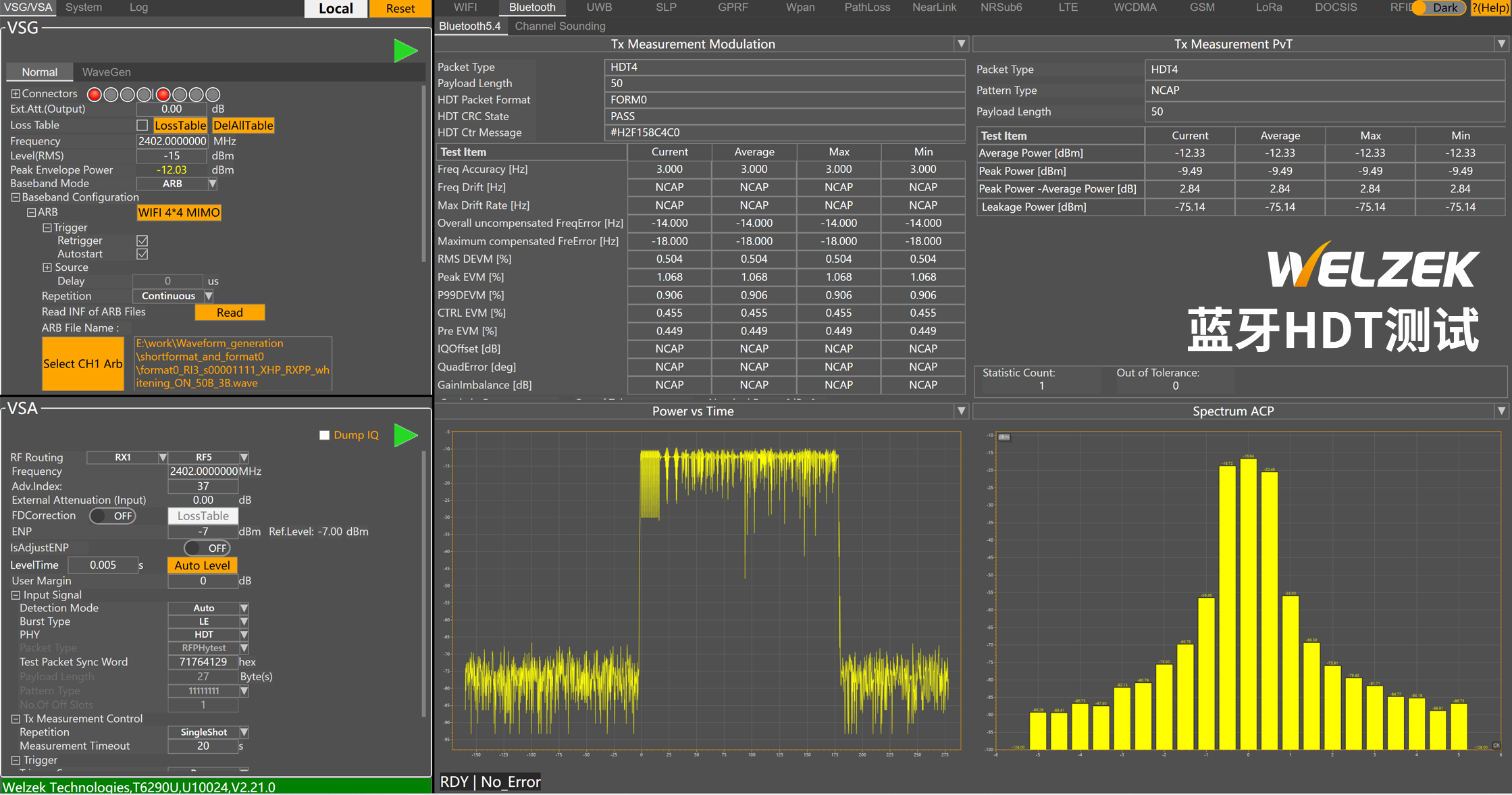
Bluetooth Higher Data Throughput (HDT), introduced in Bluetooth Core Specification v6.0, significantly boosts LE data rates up to 7.5 Mbps—3.75× faster than traditional LE 2M PHY. This breakthrough is achieved through PHY and protocol layer optimizations for IoT and consumer electronics.
PHY Layer: HDT employs advanced modulations: π/4‑QPSK, 8PSK, and 16QAM, with a symbol rate of 2 Msym/s. It also introduces convolutional coding and dynamic puncturing (e.g., 2/3 rate puncturing). For enhanced reliability, a 32‑bit CRC replaces the legacy 24‑bit CRC.
Protocol Layer: HDT offers three flexible packet formats:
Short Format – control signaling
Format0 – backward compatible with legacy modes
Format1 – supports multi‑PDU aggregation and intelligent block transmission
Selective retransmission via TxBlockMap reduces resource waste, while block‑level ACK (RxBitmap) and dynamic rate adaptation (Link Quality feedback) enable smart flow control in complex wireless environments.
Bluetooth HDT Test Cases
◇ Power vs.Time
◇ Nominal Pow
◇ Peak Pow
◇ Payload Length
◇ EVM
◇ HDT Control Message
◇ Frequency Error
◇ Frequency Drift
◇ Max Drift Rate
◇ I/Q Origin Offset
◇ Spectrum ACP

The T6290 series wireless tester supports Bluetooth 1.0 to 6.0 related technology tests, including BR/EDR/LE/CS/HDT.

The T6290 series tester fully covers HDT chip, module, and terminal testing – from R&D validation and RF conformance to production line batch testing.

Supports OTA, TX, RX, and simultaneous TX/RX testing.

Innovation-Driven R&D, Expanding Product Capabilities.