

AR/VR Glasses

AR/VR Controller

Bluetooth

UWB

Wi-Fi

Cellular
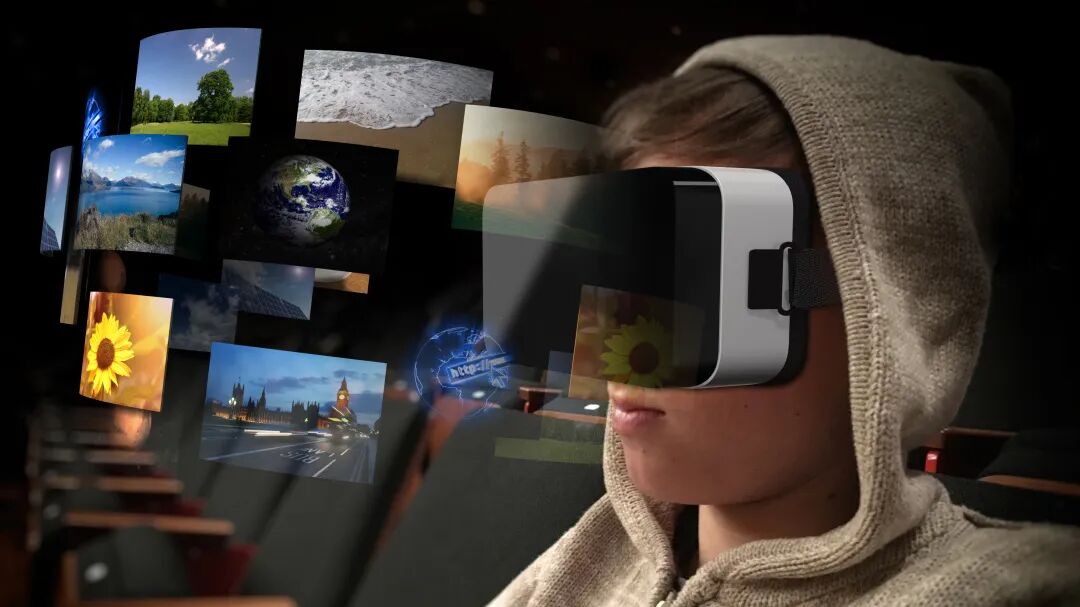
AR (Augmented Reality)
AR seamlessly integrates the real world with virtual information. Using cameras and sensors, it captures the physical environment in real time and overlays virtual elements, enabling a "virtual‑real" experience. Core advantages: real‑time interaction and dynamic adaptation to user movements and perspectives.
Use cases:
Real‑time translation overlay
Virtual screens for multi‑display office work
Virtual models in immersive education
VR (Virtual Reality)VR creates a fully immersive, computer‑generated 3D environment, blocking out the real world to deliver a strong sense of presence. Users wear VR headsets and use interactive devices to engage with virtual scenes in real time.
Use cases:
Immersive HD cinema experiences
Virtual gaming
Virtual showrooms / exhibitions
AR/VR Wireless Technologies
AR/VR devices integrate multiple wireless technologies to enable diverse functions—from fast pairing with computers, phones, and controllers to stable transmission of high‑definition data and interactive commands, as well as advanced features like gesture recognition and distance sensing.
5G (Cellular)
Purpose: Transmits HD video and interactive data with low latency and high stability, supporting immersive experiences and multi‑device coordination.
Advantages: High data rate, ultra‑low latency, better mobility.
Wi‑Fi
Purpose: Enables fast pairing and data transfer between AR/VR devices and terminals (PCs, phones) for smooth operation in home and office environments.
Advantages: Easy connection, high throughput, low power consumption.
Bluetooth
Purpose: Provides short‑range wireless pairing and data exchange with peripherals (controllers, headsets, wristbands), and assists in basic interactions like proximity sensing and gesture recognition.
Advantages: Very low power, stable connection, long battery life.
UWB
Purpose: Delivers centimeter‑level spatial positioning and close‑range device coordination, enabling gesture recognition, spatial tracking, and precise alignment of virtual and real scenes.
Advantages: Extremely high positioning accuracy (cm‑level), strong interference immunity.

Supported technologies: 5G NR and other cellular technologies, Bluetooth, GNSS, Wi‑Fi 7/6E/6, UWB,NearLink.etc.
Frequency range: 5 MHz – 10 GHz testing.

Headquartered in Beijing, with subsidiaries in Shenzhen, Shanghai, Xi'an, and the USA. Channel partners in Taiwan, China; Tokyo, Japan; and Seoul, South Korea. Global after-sales service centers in Taiwan, China; the USA; Vietnam; South Korea; Singapore; Thailand; and India.

Supports complex test scenarios: simultaneous testing of different standards such as WiFi+Cellular, WiFi+Bluetooth, etc.

Innovation-Driven R&D, Expanding Product Capabilities.